

 Gibraltar Federation of Small Businesses


 Gibraltar Federation of Small Businesses

“What about a claim against the contractor/company who due to negligence cause the power cut? There seems to be no liability on their part as it keeps reoccurring”.
The Court’s public policy considerations
Loss allocation:–
Who can afford to bear the loss?
Which of the parties have insurance/ is the situation one subject to compulsory insurance?
Is the defendant a publicly funded body?
Opening the floodgates:-
Will imposing liability lead to a high volume of new claims?
What effect would this have on cost of insurance or its availability?
Will the courts be able to cope with the volume of cases?
The practical effects of imposing liability
Will the imposition of a duty of care act as a deterrent or raise standards?
Will imposing a duty have an adverse effect on decision making?
Will it affect the allocation of resources away from necessities?
(i) if the law allowed recovery for all economic loss, the extent of liability in many situations would be enormous. In this case, the contractor who cut the mainline electricity cable would have been liable to a range of businesses whose trade had been interrupted as a result;
(ii) the contractor could be bankrupted by needing to compensate all business affected by the power interruption arising from this single mistake and would have been forced to carry an excessive part of the risk associated with a socially useful activity which it carried on;
(iii) the effect of imposing such liability upon the contractor could deter the activity from being carried out at all;
(iv) the Court’s fear behind allowing claims for “pure economic loss” is that potentially unlimited claims could flood in. The Court has continued to have regard to these public policy considerations in cases involving public utilities and has limited the right to make claims for damages due to concerns that it may open the floodgates to litigation.


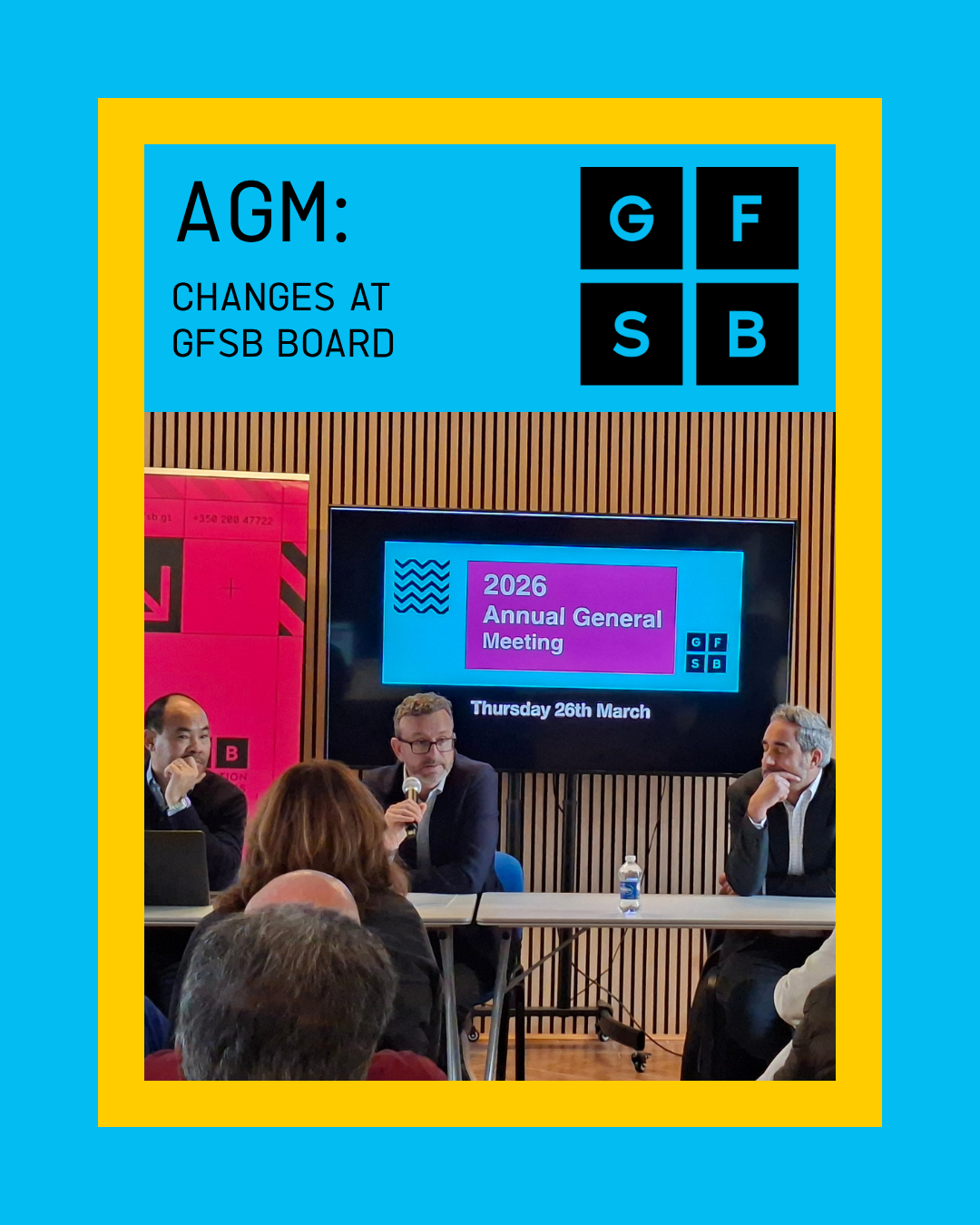
On March 26th, the GFSB held its Annual General Meeting, where several changes to the Board were announced. The AGM showcased the dedication of current members and welcomed new individuals prepared to lead the organisation into its next chapter.

According to an EU-issued Press Release, EU member states have now approved the legal texts for the long-awaited EU-UK agreement on Gibraltar with the Agreement now expected to enter into provisional application on 15 July 2026.

In Parliament this week, Gibraltar’s Minister for Trade, Nigel Feetham, confirmed that a licence has been granted for a company to operate in the prediction markets space. He described this as an area of “substantial” growth potential for Gibraltar, linking it to the Government’s wider push to diversify the economy and attract new types of business.

Over the last 48 hrs many members have been contacting the GFSB and asking us whether or not they need to obtain an EORI number if they import goods - and if so, how to go about obtaining one. The issue is causing concern and worry amongst members who are unsure whether or not they have to go through this process - and what the consequences might be if they pursue it - or don’t. Here’s what we know.

The Gibraltar Federation of Small Businesses (GFSB) notes the Government’s press release of 23rd March regarding the forthcoming transaction tax and the messaging surrounding its implementation.