

 Gibraltar Federation of Small Businesses


 Gibraltar Federation of Small Businesses

The shock announcement of a 40 percent UK gaming duty has sent a jolt through one of our most important industries, with global operators, markets and ministers scrambling to assess the fallout. What happens next matters for all of us, because gaming is not just another sector, it is a major driver of jobs, tax revenues and economic confidence, and the effects of this decision are being felt far beyond Gibraltar.
Gibraltar firms react
Two of Gibraltar’s largest operators have issued stark warnings:
Evoke CEO Peter Widerström said the increase is “highly damaging” and will trigger “a significant reduction in investment into the UK” along with the “likely need for thousands of jobs to be cut up and down the country,” adding that higher taxes could push players to the “illegal and dangerous black market”.
Entain CEO Stella David said the decision “puts at risk an industry which already contributes £7bn annually to the UK economy,” warning of reduced sports funding and job losses.
Not just Gibraltar issue
The UK tax rise on gaming is not just a Gibraltar issue. Other gaming hubs that host UK-facing operators are also bracing for impact:
Malta
Malta’s iGaming sector, already dealing with tightening EU regulatory scrutiny, has warned privately that the UK’s 40 percent duty will “compress margins to breaking point” for operators with large UK market share. Industry groups there say several firms are reassessing UK-focused operations and reviewing staffing levels.
Ireland
Ireland hosts major listed groups such as Flutter, which derives a significant share of revenue from the UK. Dublin analysts have said the new duty could trigger “material earnings downgrades” and redirect investment away from UK-facing products towards US and other emerging markets.
The Isle of Man
The Isle of Man Government has acknowledged that higher UK consumption taxes could reduce the corporate tax base of its remote gaming licensees. Officials say they are monitoring whether operators will consolidate or shift activity to markets with more stable regulatory costs.
Minister Feetham: “bad news”
In Parliament, Minister for Justice, Trade and Industry Nigel Feetham described the rise as “bad news” that could unwind recent gains in public finances and force a difficult adjustment for the Rock’s economy.
Key points from his statement to Parliament:
Feetham emphasised that Gibraltar “lobbied strongly” for differentiated treatment or a phased increase but that these arguments were ultimately unsuccessful. The Government is now preparing for a “wider economic shift”.
Pivot to diversification
But we better hurry, pivoting to tech, AI and digital sectors is also the strategy in several jurisdictions. Malta’s MFSA and the Isle of Man’s Digital Agency have both highlighted “agility in adjacent tech verticals” as essential to offset the shock.
Gibraltar now faces a period of adjustment, with pressure on revenues and fresh urgency behind efforts to diversify the economy. What do you think this means for the Rock’s long-term strategy, and how should Gibraltar respond as other jurisdictions race to reposition themselves too? Share your views with on the Glueup Community pages and join the conversation.


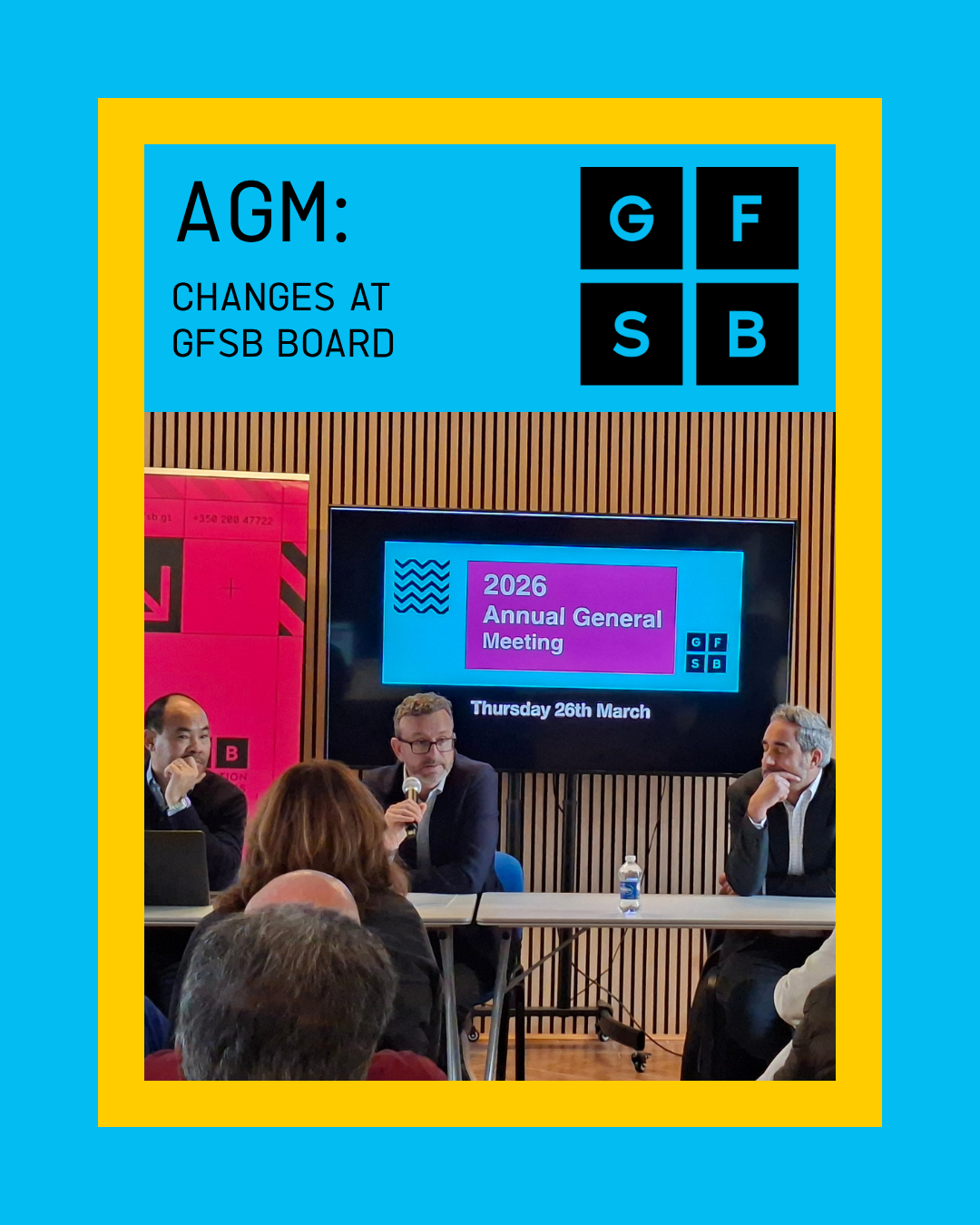
On March 26th, the GFSB held its Annual General Meeting, where several changes to the Board were announced. The AGM showcased the dedication of current members and welcomed new individuals prepared to lead the organisation into its next chapter.

According to an EU-issued Press Release, EU member states have now approved the legal texts for the long-awaited EU-UK agreement on Gibraltar with the Agreement now expected to enter into provisional application on 15 July 2026.

In Parliament this week, Gibraltar’s Minister for Trade, Nigel Feetham, confirmed that a licence has been granted for a company to operate in the prediction markets space. He described this as an area of “substantial” growth potential for Gibraltar, linking it to the Government’s wider push to diversify the economy and attract new types of business.
Over the last 48 hrs many members have been contacting the GFSB and asking us whether or not they need to obtain an EORI number if they import goods - and if so, how to go about obtaining one. The issue is causing concern and worry amongst members who are unsure whether or not they have to go through this process - and what the consequences might be if they pursue it - or don’t. Here’s what we know.
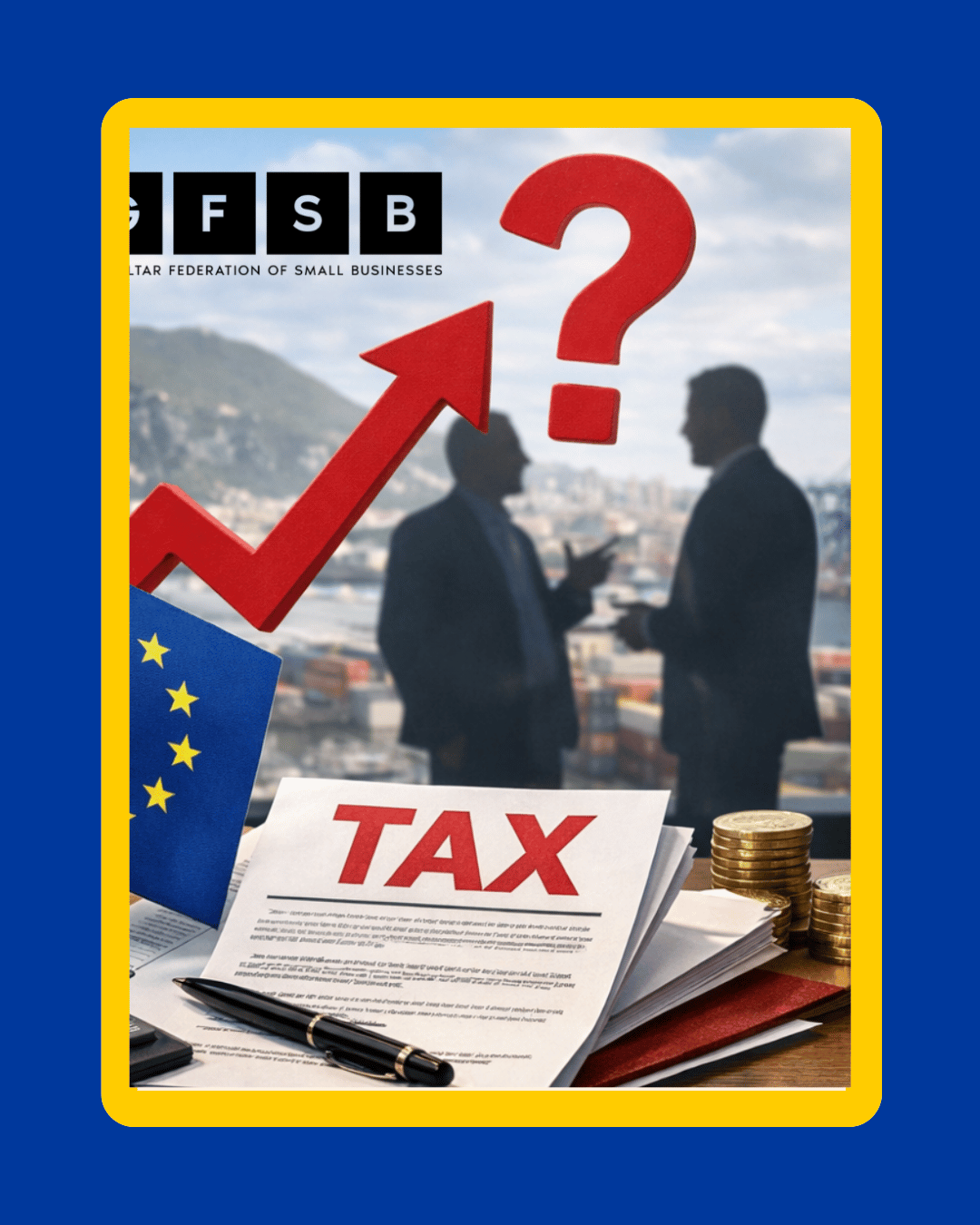
The Gibraltar Federation of Small Businesses (GFSB) notes the Government’s press release of 23rd March regarding the forthcoming transaction tax and the messaging surrounding its implementation.